Read top to bottom: each phase shows the position at that point in time, and each turning point explains the shift from the previous phase to the next one.
Posts analyzed475
Phases12
Turning points8
Coverage2014–2026
Trump's relationship with Ukraine across 2014–2026 splits into three functionally distinct phases. In the first (2014–2018), Ukraine is a peripheral geopolitical topic used mainly to criticize Obama's weakness and frame Russia engagement as pragmatic. In the second (2019–2020), Ukraine becomes the central battlefield of the first impeachment — transformed entirely into a domestic political weapon: the 'Ukraine Hoax', Biden corruption, and Schiff fabrications dominate. The topic nearly vanishes in 2021 before returning in 2022 as proof that 'it would never have happened under Trump'. The third phase (2025–2026) sees Trump as active peace broker — calling Putin and Zelensky weekly, proposing ceasefires, threatening Russia with sanctions, and ultimately framing himself as the indispensable dealmaker. Throughout all three phases, one constant holds: Ukraine is never purely about Ukraine. It is always instrumentalized — first as a critique of others, then as a legal defense, then as a personal legacy project.
Phase 012014
hawkish observer blaming obama
Ukraine crisis as evidence of Obama's incompetence. Russia acts while the US talks. China benefits. The US gets played. Trump positions himself as the outside expert who sees through weak leadership.
Six posts, all in early 2014 around the Crimea annexation. Trump mocks US appeals to Russia ('Russia tells US they will not become involved, and then laughs loudly'), frames China's oil deal with Russia as smart opportunism, and positions himself as the leader who would have handled it differently. Ukraine is not a country Trump cares about — it is a stage for criticizing Obama. No policy prescription beyond implied toughness.
↔
After2016-2018
During the campaign (2016) Trump defensively clarifies his 'not going into Ukraine' comment as conditional on his presidency, noting Crimea is already taken. As president, the 2017 White House and UN meetings with Poroshenko are protocol-neutral — warm but perfunctory. The Ukraine reference in the 2017 'haters and fools' post is revealing: Ukraine is listed as a problem Russia could help solve, alongside North Korea and Syria. By 2018, when Russian ships seize Ukrainian sailors, Trump cancels a Putin meeting — a firm but isolated response. The dataset is thin; Ukraine remains a secondary concern.
Ukraine as one item on a list of problems that could be solved through better US-Russia relations. Trump frames engaging Russia as smart strategy, not weakness. Ukraine appears alongside Syria, North Korea, and ISIS as shared problems that Russia could help resolve. A brief positive note enters with official White House meetings with Ukrainian presidents.
During the campaign (2016) Trump defensively clarifies his 'not going into Ukraine' comment as conditional on his presidency, noting Crimea is already taken. As president, the 2017 White House and UN meetings with Poroshenko are protocol-neutral — warm but perfunctory. The Ukraine reference in the 2017 'haters and fools' post is revealing: Ukraine is listed as a problem Russia could help solve, alongside North Korea and Syria. By 2018, when Russian ships seize Ukrainian sailors, Trump cancels a Putin meeting — a firm but isolated response. The dataset is thin; Ukraine remains a secondary concern.
↔
After2019 (May–Aug)
From May 2019 onwards, Trump begins amplifying the Biden-Burisma narrative. Posts focus on Hunter Biden's Burisma payments ($83,000/month), Joe Biden's 2015–16 interference in Ukrainian prosecution, and the framing of the Bidens as corrupt beneficiaries of Ukrainian oligarch money. This pre-impeachment phase establishes the narrative frame Trump will use defensively throughout the fall. Ukraine's geopolitical situation is entirely absent.
Ukraine as the terrain of Biden family corruption. Hunter Biden's Burisma role, Joe Biden's pressure to fire a prosecutor, and foreign money flows dominate. Ukraine is not a country in crisis — it is evidence in a political prosecution of the Biden family.
From May 2019 onwards, Trump begins amplifying the Biden-Burisma narrative. Posts focus on Hunter Biden's Burisma payments ($83,000/month), Joe Biden's 2015–16 interference in Ukrainian prosecution, and the framing of the Bidens as corrupt beneficiaries of Ukrainian oligarch money. This pre-impeachment phase establishes the narrative frame Trump will use defensively throughout the fall. Ukraine's geopolitical situation is entirely absent.
↔
After2019 (Sep–Dec)
By far the densest period in the dataset (135 posts in 2019, concentrated Sep–Dec). Every post about Ukraine is a defense against impeachment or an attack on Democrats. Key recurring elements: 'Read the Transcript', Schiff's 'fraudulent' reading, Zelensky's public denials of pressure, and the counterargument that Trump gave Ukraine lethal aid that Obama refused. The phrase 'Ukraine Hoax' crystallizes the frame. Ukraine's actual security situation — Russia's continued occupation of Donbas — is never mentioned. Ukraine the nation is instrumentalized entirely as a legal and political battlefield.
Ukraine reframed entirely as a domestic political weapon wielded by Democrats. The call with Zelensky was 'perfect'. Schiff fabricated the transcript. Whistleblower is a fraud. Zelensky himself confirms there was no pressure. Ukraine the country becomes a prop in Trump's self-defense narrative.
By far the densest period in the dataset (135 posts in 2019, concentrated Sep–Dec). Every post about Ukraine is a defense against impeachment or an attack on Democrats. Key recurring elements: 'Read the Transcript', Schiff's 'fraudulent' reading, Zelensky's public denials of pressure, and the counterargument that Trump gave Ukraine lethal aid that Obama refused. The phrase 'Ukraine Hoax' crystallizes the frame. Ukraine's actual security situation — Russia's continued occupation of Donbas — is never mentioned. Ukraine the nation is instrumentalized entirely as a legal and political battlefield.
The release of the Ukraine call transcript and launch of the impeachment inquiry transforms Ukraine entirely. Every subsequent post in 2019 is about the impeachment, not about Ukraine's security. The word 'Ukraine' becomes synonymous with 'Hoax' in Trump's vocabulary.
Before2019 (May–Aug)
From May 2019 onwards, Trump begins amplifying the Biden-Burisma narrative. Posts focus on Hunter Biden's Burisma payments ($83,000/month), Joe Biden's 2015–16 interference in Ukrainian prosecution, and the framing of the Bidens as corrupt beneficiaries of Ukrainian oligarch money. This pre-impeachment phase establishes the narrative frame Trump will use defensively throughout the fall. Ukraine's geopolitical situation is entirely absent.
↔
After2019 (Sep–Dec)
By far the densest period in the dataset (135 posts in 2019, concentrated Sep–Dec). Every post about Ukraine is a defense against impeachment or an attack on Democrats. Key recurring elements: 'Read the Transcript', Schiff's 'fraudulent' reading, Zelensky's public denials of pressure, and the counterargument that Trump gave Ukraine lethal aid that Obama refused. The phrase 'Ukraine Hoax' crystallizes the frame. Ukraine's actual security situation — Russia's continued occupation of Donbas — is never mentioned. Ukraine the nation is instrumentalized entirely as a legal and political battlefield.
↔
After2020
Post-acquittal, Trump continues invoking the 'Ukraine Scam' as part of his victimhood narrative alongside Russia and the Mueller investigation. The Ukraine money angle is deployed in comparisons with Republican budget fights. Zelensky's statements exonerating Trump are cited repeatedly as proof the Democrats were wrong. By mid-2020 Ukraine fades again, occasionally invoked to contrast Trump's toughness on Russia with Biden's alleged softness.
Ukraine Hoax as the successor to Russia Hoax — part of a recurring pattern of Democratic weaponization of foreign policy topics against Trump. Impeachment acquittal framed as vindication. Biden corruption re-emphasized as the real story. Ukraine the country almost entirely absent.
Post-acquittal, Trump continues invoking the 'Ukraine Scam' as part of his victimhood narrative alongside Russia and the Mueller investigation. The Ukraine money angle is deployed in comparisons with Republican budget fights. Zelensky's statements exonerating Trump are cited repeatedly as proof the Democrats were wrong. By mid-2020 Ukraine fades again, occasionally invoked to contrast Trump's toughness on Russia with Biden's alleged softness.
↔
After2022
31 posts, mostly amplifications and links rather than original analysis. The core message is simple: 'This is Biden's war.' The $40 billion Ukraine aid package becomes a recurring talking point against domestic underfunding. Trump also begins signaling he could end the war, laying groundwork for the 2024 campaign. The counterfactual prevention narrative ('would never have happened') is repeated so consistently it becomes a rhetorical signature.
Russia's invasion of Ukraine (February 2022) is immediately framed as something 'that would never have happened under Trump'. Ukraine aid spending ($40B) is compared to domestic priorities. Trump positions himself as the only leader who could have prevented — and now could end — the war.
31 posts, mostly amplifications and links rather than original analysis. The core message is simple: 'This is Biden's war.' The $40 billion Ukraine aid package becomes a recurring talking point against domestic underfunding. Trump also begins signaling he could end the war, laying groundwork for the 2024 campaign. The counterfactual prevention narrative ('would never have happened') is repeated so consistently it becomes a rhetorical signature.
Russia's full-scale invasion immediately triggers Trump's 'would never have happened under me' framing. Ukraine re-enters the discourse not as a foreign policy challenge but as proof of Biden's failure and Trump's superior deterrence.
Before2020
Post-acquittal, Trump continues invoking the 'Ukraine Scam' as part of his victimhood narrative alongside Russia and the Mueller investigation. The Ukraine money angle is deployed in comparisons with Republican budget fights. Zelensky's statements exonerating Trump are cited repeatedly as proof the Democrats were wrong. By mid-2020 Ukraine fades again, occasionally invoked to contrast Trump's toughness on Russia with Biden's alleged softness.
↔
After2022
31 posts, mostly amplifications and links rather than original analysis. The core message is simple: 'This is Biden's war.' The $40 billion Ukraine aid package becomes a recurring talking point against domestic underfunding. Trump also begins signaling he could end the war, laying groundwork for the 2024 campaign. The counterfactual prevention narrative ('would never have happened') is repeated so consistently it becomes a rhetorical signature.
↔
After2023
102 posts but many are links or reposts. The '24 hours' peace claim appears prominently. Trump criticizes the $120–200 billion in Ukraine aid relative to American domestic needs. Biden's Burisma entanglement is revived in the context of the 2024 campaign. European NATO members are attacked for energy hypocrisy. Trump also begins citing international leaders (Polish president Duda) who believe he could end the war — building legitimacy for the peace broker frame.
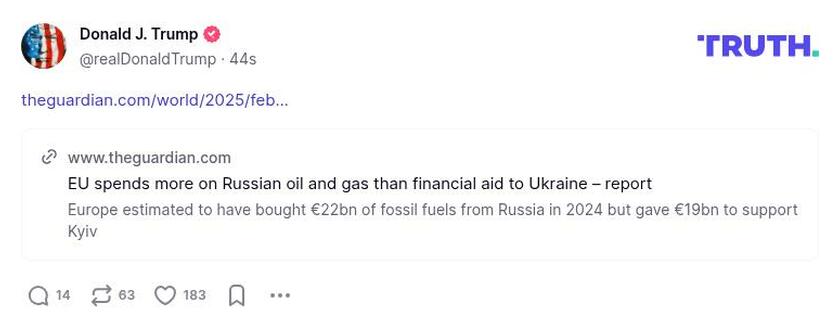
Ukraine war as a product of American incompetence and European free-riding. Trump as the only one who can end it in 24 hours. NATO burden-sharing becomes a key sub-frame. Biden corruption in Ukraine (Burisma, Shokin) revisited as campaign material. European nations criticized for buying Russian oil while letting America pay for defense.
102 posts but many are links or reposts. The '24 hours' peace claim appears prominently. Trump criticizes the $120–200 billion in Ukraine aid relative to American domestic needs. Biden's Burisma entanglement is revived in the context of the 2024 campaign. European NATO members are attacked for energy hypocrisy. Trump also begins citing international leaders (Polish president Duda) who believe he could end the war — building legitimacy for the peace broker frame.
The '24 hours' post marks the transition from criticizing the war's origins to claiming the ability to end it. This becomes the central Ukraine promise of the 2024 campaign.
Before2022
31 posts, mostly amplifications and links rather than original analysis. The core message is simple: 'This is Biden's war.' The $40 billion Ukraine aid package becomes a recurring talking point against domestic underfunding. Trump also begins signaling he could end the war, laying groundwork for the 2024 campaign. The counterfactual prevention narrative ('would never have happened') is repeated so consistently it becomes a rhetorical signature.
↔
After2023
102 posts but many are links or reposts. The '24 hours' peace claim appears prominently. Trump criticizes the $120–200 billion in Ukraine aid relative to American domestic needs. Biden's Burisma entanglement is revived in the context of the 2024 campaign. European NATO members are attacked for energy hypocrisy. Trump also begins citing international leaders (Polish president Duda) who believe he could end the war — building legitimacy for the peace broker frame.
↔
After2024
61 posts, largely campaign-context. Trump's Ukraine messaging in 2024 is calibrated for electoral impact: the war as Biden's incompetence, European free-riding on American generosity, and Trump as the only one who could have prevented it and can now stop it. The loans-vs-grants framing (amplified via NYT op-ed) signals a more transactional approach to future aid. Zelensky is not attacked but kept at arm's length. The 'nobody could have prevented it but Trump' narrative is used symmetrically with Israel and Russia's non-invasion claims.
Ukraine war as Biden's failure and proof that America needs Trump back. Aid as loans rather than grants. European burden-sharing as precondition for US involvement. The '24 hours' claim remains but is supplemented by more concrete proposals (loans, equalization of European contributions). Ukraine's survival becomes implicitly conditional on deal terms.
61 posts, largely campaign-context. Trump's Ukraine messaging in 2024 is calibrated for electoral impact: the war as Biden's incompetence, European free-riding on American generosity, and Trump as the only one who could have prevented it and can now stop it. The loans-vs-grants framing (amplified via NYT op-ed) signals a more transactional approach to future aid. Zelensky is not attacked but kept at arm's length. The 'nobody could have prevented it but Trump' narrative is used symmetrically with Israel and Russia's non-invasion claims.
↔
After2025 (Jan–Apr)
The second term opens with a flurry of diplomatic activity. Trump calls Putin (Feb 12), calls Zelensky (Feb 12), announces talks are going well (Feb 13), sends Bessent to Kyiv, and appoints Kellogg as Special Envoy. The '24 hours' claim quietly disappears — replaced by 'we're close to a deal'. The Zelensky-as-comedian line ('a modestly successful comedian who talked the US into spending $350 billion') introduces a mocking undertone. When Zelensky publicly says Crimea is non-negotiable, Trump publicly rebukes him for harming peace negotiations. The Rare Earths deal delay triggers another rebuke. Ukraine is being managed, not championed.
Trump as the indispensable mediator calling both Putin and Zelensky, deploying Treasury secretaries and special envoys, pushing for ceasefires. Ukraine's sovereignty is nominally respected but implicitly conditioned on signing deals (Rare Earths) and making concessions (Crimea). Zelensky begins to appear as an obstacle when he publicly resists deal terms.
The second term opens with a flurry of diplomatic activity. Trump calls Putin (Feb 12), calls Zelensky (Feb 12), announces talks are going well (Feb 13), sends Bessent to Kyiv, and appoints Kellogg as Special Envoy. The '24 hours' claim quietly disappears — replaced by 'we're close to a deal'. The Zelensky-as-comedian line ('a modestly successful comedian who talked the US into spending $350 billion') introduces a mocking undertone. When Zelensky publicly says Crimea is non-negotiable, Trump publicly rebukes him for harming peace negotiations. The Rare Earths deal delay triggers another rebuke. Ukraine is being managed, not championed.
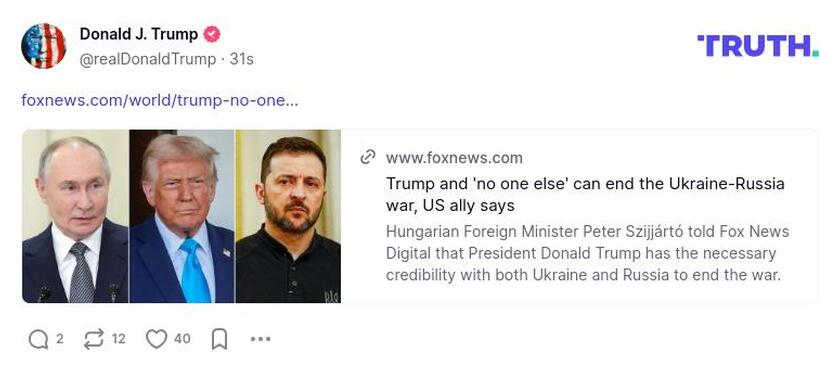
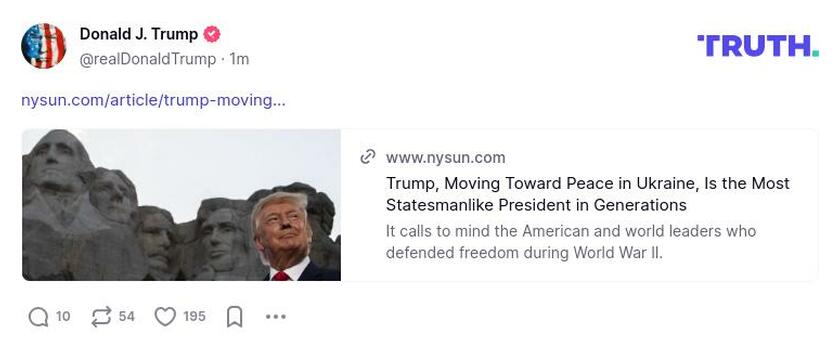
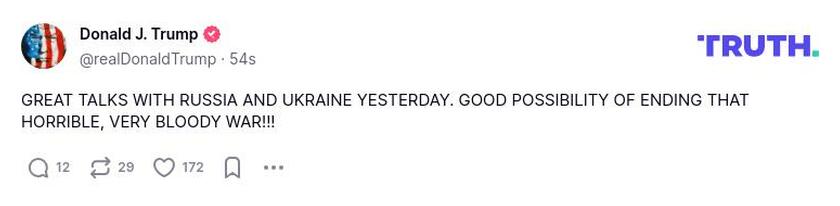
On the same day Trump calls both Putin and Zelensky and announces 'great talks'. The 24-hour claim becomes an active diplomatic agenda rather than a rhetorical device. Ukraine is now a primary presidential responsibility.
Before2024
61 posts, largely campaign-context. Trump's Ukraine messaging in 2024 is calibrated for electoral impact: the war as Biden's incompetence, European free-riding on American generosity, and Trump as the only one who could have prevented it and can now stop it. The loans-vs-grants framing (amplified via NYT op-ed) signals a more transactional approach to future aid. Zelensky is not attacked but kept at arm's length. The 'nobody could have prevented it but Trump' narrative is used symmetrically with Israel and Russia's non-invasion claims.
↔
After2025 (Jan–Apr)
The second term opens with a flurry of diplomatic activity. Trump calls Putin (Feb 12), calls Zelensky (Feb 12), announces talks are going well (Feb 13), sends Bessent to Kyiv, and appoints Kellogg as Special Envoy. The '24 hours' claim quietly disappears — replaced by 'we're close to a deal'. The Zelensky-as-comedian line ('a modestly successful comedian who talked the US into spending $350 billion') introduces a mocking undertone. When Zelensky publicly says Crimea is non-negotiable, Trump publicly rebukes him for harming peace negotiations. The Rare Earths deal delay triggers another rebuke. Ukraine is being managed, not championed.
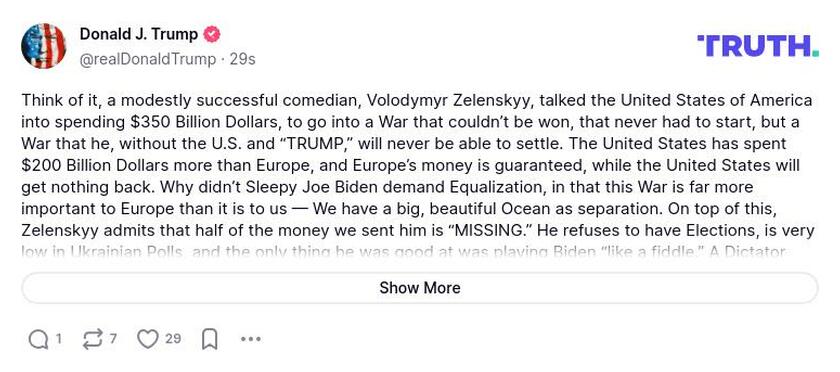
The 'modestly successful comedian' post marks the first open dismissiveness toward Zelensky. It signals that Trump's patience with Zelensky has limits and that Ukraine's interests are secondary to a deal being reached.
Before2024
61 posts, largely campaign-context. Trump's Ukraine messaging in 2024 is calibrated for electoral impact: the war as Biden's incompetence, European free-riding on American generosity, and Trump as the only one who could have prevented it and can now stop it. The loans-vs-grants framing (amplified via NYT op-ed) signals a more transactional approach to future aid. Zelensky is not attacked but kept at arm's length. The 'nobody could have prevented it but Trump' narrative is used symmetrically with Israel and Russia's non-invasion claims.
↔
After2025 (Jan–Apr)
The second term opens with a flurry of diplomatic activity. Trump calls Putin (Feb 12), calls Zelensky (Feb 12), announces talks are going well (Feb 13), sends Bessent to Kyiv, and appoints Kellogg as Special Envoy. The '24 hours' claim quietly disappears — replaced by 'we're close to a deal'. The Zelensky-as-comedian line ('a modestly successful comedian who talked the US into spending $350 billion') introduces a mocking undertone. When Zelensky publicly says Crimea is non-negotiable, Trump publicly rebukes him for harming peace negotiations. The Rare Earths deal delay triggers another rebuke. Ukraine is being managed, not championed.
When Zelensky publicly declares Crimea non-negotiable, Trump publicly rebukes him for harming peace negotiations. The implicit conditionality of US support becomes explicit: Zelensky must accept deal terms or risk losing Trump's backing.
Before2024
61 posts, largely campaign-context. Trump's Ukraine messaging in 2024 is calibrated for electoral impact: the war as Biden's incompetence, European free-riding on American generosity, and Trump as the only one who could have prevented it and can now stop it. The loans-vs-grants framing (amplified via NYT op-ed) signals a more transactional approach to future aid. Zelensky is not attacked but kept at arm's length. The 'nobody could have prevented it but Trump' narrative is used symmetrically with Israel and Russia's non-invasion claims.
↔
After2025 (Jan–Apr)
The second term opens with a flurry of diplomatic activity. Trump calls Putin (Feb 12), calls Zelensky (Feb 12), announces talks are going well (Feb 13), sends Bessent to Kyiv, and appoints Kellogg as Special Envoy. The '24 hours' claim quietly disappears — replaced by 'we're close to a deal'. The Zelensky-as-comedian line ('a modestly successful comedian who talked the US into spending $350 billion') introduces a mocking undertone. When Zelensky publicly says Crimea is non-negotiable, Trump publicly rebukes him for harming peace negotiations. The Rare Earths deal delay triggers another rebuke. Ukraine is being managed, not championed.
↔
After2025 (May–Aug)
The most dynamic phase. Trump's May 19 call with Putin ('went very well') is followed within days by exasperation: Putin 'has gone absolutely CRAZY' after continued bombardment of Ukrainian cities. Trump threatens sanctions on Russia — a significant rhetorical shift. Prisoner swaps, ceasefire calls (30-day unconditional), Turkey summit proposals, and Alaska bilateral meetings all occur. By late August Trump shockingly suggests Ukraine could 'fight and WIN all of Ukraine back' — a reversal from his earlier implicit acceptance of territorial concessions. Posting frequency is high; the war is a daily concern.
The ceasefire is always 'close' but never arrives. Trump's tone toward Putin shifts sharply in late May ('gone absolutely CRAZY') when missile strikes on Ukrainian cities continue. He threatens Russia with major banking sanctions. He then meets both leaders in Alaska (August) and begins signaling Ukraine could actually win. The 28-point peace plan emerges. The frame becomes one of Trump as a frustrated but committed mediator.
The most dynamic phase. Trump's May 19 call with Putin ('went very well') is followed within days by exasperation: Putin 'has gone absolutely CRAZY' after continued bombardment of Ukrainian cities. Trump threatens sanctions on Russia — a significant rhetorical shift. Prisoner swaps, ceasefire calls (30-day unconditional), Turkey summit proposals, and Alaska bilateral meetings all occur. By late August Trump shockingly suggests Ukraine could 'fight and WIN all of Ukraine back' — a reversal from his earlier implicit acceptance of territorial concessions. Posting frequency is high; the war is a daily concern.
After weeks of framing Putin as a rational negotiating partner, Trump publicly declares Putin has 'gone absolutely CRAZY' following continued missile strikes on Ukrainian cities. This is the sharpest pro-Ukraine rhetorical shift in the entire dataset.
Before2025 (Jan–Apr)
The second term opens with a flurry of diplomatic activity. Trump calls Putin (Feb 12), calls Zelensky (Feb 12), announces talks are going well (Feb 13), sends Bessent to Kyiv, and appoints Kellogg as Special Envoy. The '24 hours' claim quietly disappears — replaced by 'we're close to a deal'. The Zelensky-as-comedian line ('a modestly successful comedian who talked the US into spending $350 billion') introduces a mocking undertone. When Zelensky publicly says Crimea is non-negotiable, Trump publicly rebukes him for harming peace negotiations. The Rare Earths deal delay triggers another rebuke. Ukraine is being managed, not championed.
↔
After2025 (May–Aug)
The most dynamic phase. Trump's May 19 call with Putin ('went very well') is followed within days by exasperation: Putin 'has gone absolutely CRAZY' after continued bombardment of Ukrainian cities. Trump threatens sanctions on Russia — a significant rhetorical shift. Prisoner swaps, ceasefire calls (30-day unconditional), Turkey summit proposals, and Alaska bilateral meetings all occur. By late August Trump shockingly suggests Ukraine could 'fight and WIN all of Ukraine back' — a reversal from his earlier implicit acceptance of territorial concessions. Posting frequency is high; the war is a daily concern.
↔
After2025 (Sep–Dec)
Sustained but less frenetic activity. Trump issues a formal NATO letter demanding members stop buying Russian oil before he'll support sanctions. He continues regular Putin and Zelensky calls. The November progress on a 28-point peace plan and a Mar-a-Lago Zelensky dinner in late December signal a deal may be approaching. Trump amplifies Nobel Prize nomination narratives. The juxtaposition of 'settling 6 wars' self-promotion with continued impeachment grievance posts ('Ukraine Hoax was bigger than Watergate') is the defining tension of this period.
Ukraine war as the remaining open item in Trump's claimed 'settling of 6 wars in 6 months' narrative. Sanctions threats against Russia, NATO burden-sharing ultimatum, and continued bilateral calls all signal sustained engagement. Trump also returns to the impeachment grievance (Ukraine Hoax) even while actively brokering peace — suggesting the domestic political dimension never fully separates from the foreign policy one.
Sustained but less frenetic activity. Trump issues a formal NATO letter demanding members stop buying Russian oil before he'll support sanctions. He continues regular Putin and Zelensky calls. The November progress on a 28-point peace plan and a Mar-a-Lago Zelensky dinner in late December signal a deal may be approaching. Trump amplifies Nobel Prize nomination narratives. The juxtaposition of 'settling 6 wars' self-promotion with continued impeachment grievance posts ('Ukraine Hoax was bigger than Watergate') is the defining tension of this period.
Trump's post declaring Ukraine 'in a position to fight and WIN all of Ukraine back' reverses the earlier implicit acceptance that Crimea and some territories were permanently lost. This is the most significant strategic reversal in his Ukraine framing.
Before2025 (May–Aug)
The most dynamic phase. Trump's May 19 call with Putin ('went very well') is followed within days by exasperation: Putin 'has gone absolutely CRAZY' after continued bombardment of Ukrainian cities. Trump threatens sanctions on Russia — a significant rhetorical shift. Prisoner swaps, ceasefire calls (30-day unconditional), Turkey summit proposals, and Alaska bilateral meetings all occur. By late August Trump shockingly suggests Ukraine could 'fight and WIN all of Ukraine back' — a reversal from his earlier implicit acceptance of territorial concessions. Posting frequency is high; the war is a daily concern.
↔
After2025 (Sep–Dec)
Sustained but less frenetic activity. Trump issues a formal NATO letter demanding members stop buying Russian oil before he'll support sanctions. He continues regular Putin and Zelensky calls. The November progress on a 28-point peace plan and a Mar-a-Lago Zelensky dinner in late December signal a deal may be approaching. Trump amplifies Nobel Prize nomination narratives. The juxtaposition of 'settling 6 wars' self-promotion with continued impeachment grievance posts ('Ukraine Hoax was bigger than Watergate') is the defining tension of this period.
↔
After2026 (Jan–Mar)
9 posts, mostly links or passing references in broader diplomatic dispatches. Ukraine is being managed within a larger multipolar framework. Trump's call with Modi specifically asks India to stop buying Russian oil as a peace lever. The Xi call addresses Ukraine alongside trade and fentanyl. The munitions stockpile post signals the US maintains overwhelming military backup even while pursuing diplomacy. The March NSA intercept post (Ukrainian government discussing routing money to Biden's re-election) re-injects the domestic corruption angle just as the war appears close to resolution — the political instrumentalization of Ukraine never fully ends.
Ukraine war dealt with as one item in a broader geopolitical agenda alongside India oil sanctions, China trade, NATO burden-sharing, and Iran. The personal NATO achievement narrative ('I got them to 5% GDP') is foregrounded. Ukraine appears in calls with Modi, Xi, and in bilateral munitions stock discussions — no longer the primary frame but a persistent background negotiation. A late March post revives the Biden-Ukraine corruption angle via NSA intercepts of Ukrainian government messages.
9 posts, mostly links or passing references in broader diplomatic dispatches. Ukraine is being managed within a larger multipolar framework. Trump's call with Modi specifically asks India to stop buying Russian oil as a peace lever. The Xi call addresses Ukraine alongside trade and fentanyl. The munitions stockpile post signals the US maintains overwhelming military backup even while pursuing diplomacy. The March NSA intercept post (Ukrainian government discussing routing money to Biden's re-election) re-injects the domestic corruption angle just as the war appears close to resolution — the political instrumentalization of Ukraine never fully ends.
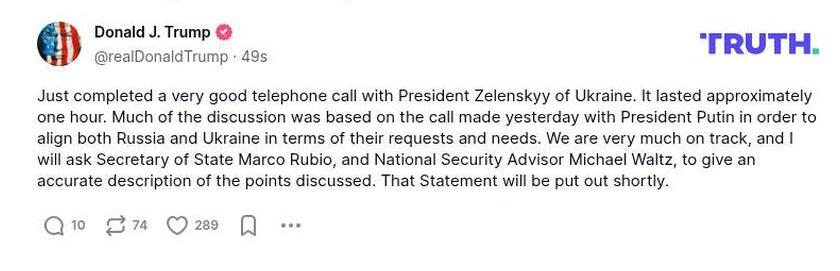
Just completed a very good telephone call with President Zelenskyy of Ukraine. It lasted approximately one hour. Much of the discussion was based on the call made yesterday with President Putin in order to align both Russia and Ukraine in terms of their requests and needs. We are very much on track, and I will ask Secretary of State Marco Rubio, and National Security Advisor Michael Waltz, to give an accurate description of the points discussed. That Statement will be put out shortly.
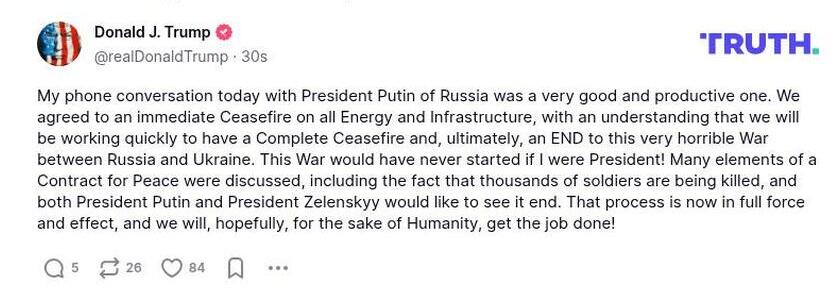
My phone conversation today with President Putin of Russia was a very good and productive one. We agreed to an immediate Ceasefire on all Energy and Infrastructure, with an understanding that we will be working quickly to have a Complete Ceasefire and, ultimately, an END to this very horrible War between Russia and Ukraine. This War would have never started if I were President! Many elements of a Contract for Peace were discussed, including the fact that thousands of soldiers are being killed, and both President Putin and President Zelenskyy would like to see it end. That process is now in full force and effect, and we will, hopefully, for the sake of Humanity, get the job done!
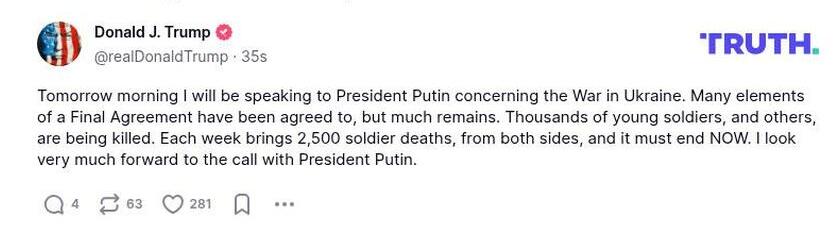
Tomorrow morning I will be speaking to President Putin concerning the War in Ukraine. Many elements of a Final Agreement have been agreed to, but much remains. Thousands of young soldiers, and others, are being killed. Each week brings 2,500 soldier deaths, from both sides, and it must end NOW. I look very much forward to the call with President Putin.
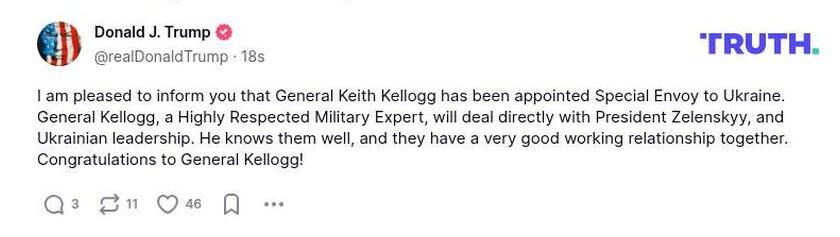
I am pleased to inform you that General Keith Kellogg has been appointed Special Envoy to Ukraine. General Kellogg, a Highly Respected Military Expert, will deal directly with President Zelenskyy, and Ukrainian leadership. He knows them well, and they have a very good working relationship together. Congratulations to General Kellogg!
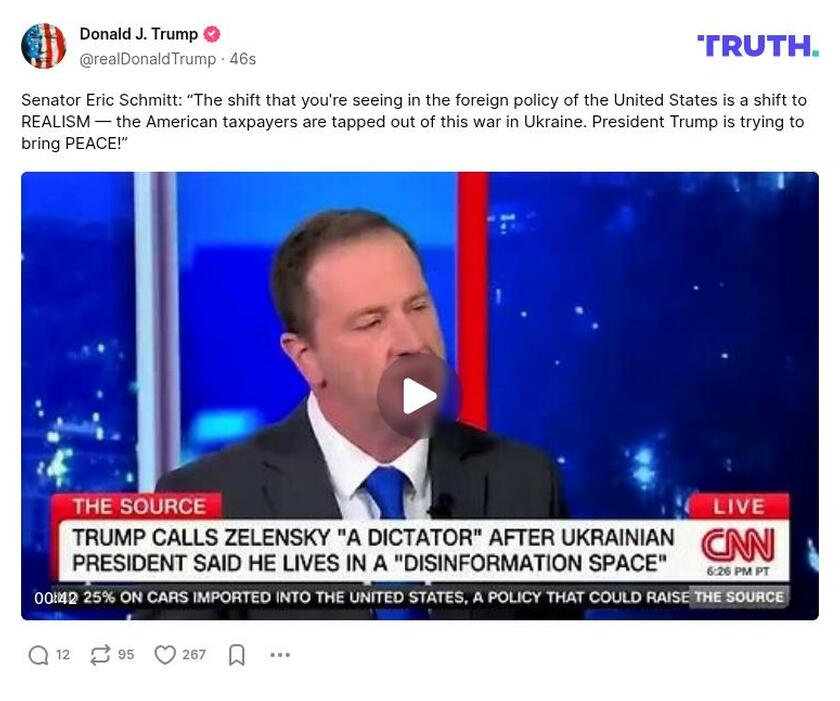
Senator Eric Schmitt: “The shift that you're seeing in the foreign policy of the United States is a shift to REALISM — the American taxpayers are tapped out of this war in Ukraine. President Trump is trying to bring PEACE!”
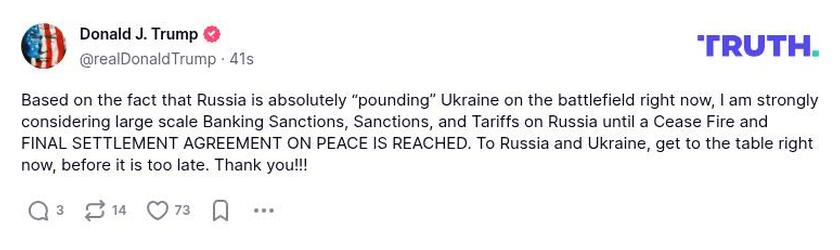
Based on the fact that Russia is absolutely “pounding” Ukraine on the battlefield right now, I am strongly considering large scale Banking Sanctions, Sanctions, and Tariffs on Russia until a Cease Fire and FINAL SETTLEMENT AGREEMENT ON PEACE IS REACHED. To Russia and Ukraine, get to the table right now, before it is too late. Thank you!!!
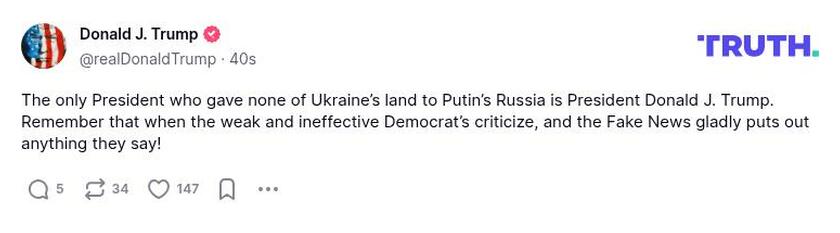
The only President who gave none of Ukraine’s land to Putin’s Russia is President Donald J. Trump. Remember that when the weak and ineffective Democrat’s criticize, and the Fake News gladly puts out anything they say!
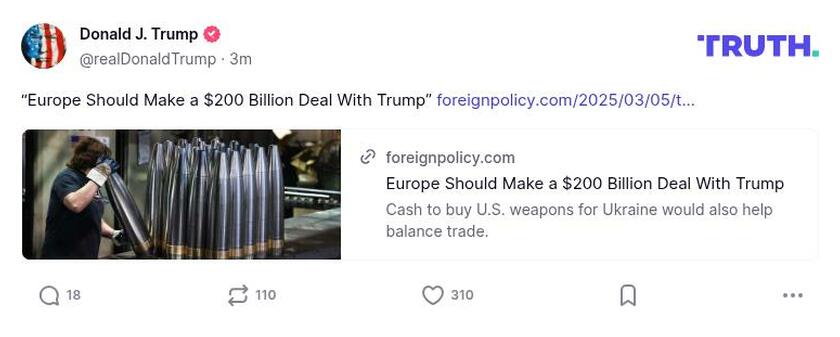
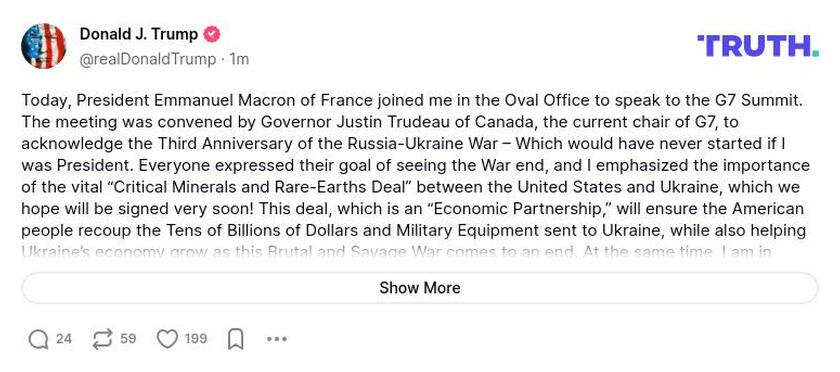
Today, President Emmanuel Macron of France joined me in the Oval Office to speak to the G7 Summit. The meeting was convened by Governor Justin Trudeau of Canada, the current chair of G7, to acknowledge the Third Anniversary of the Russia-Ukraine War – Which would have never started if I was President. Everyone expressed their goal of seeing the War end, and I emphasized the importance of the vital “Critical Minerals and Rare-Earths Deal” between the United States and Ukraine, which we hope will be signed very soon! This deal, which is an “Economic Partnership,” will ensure the American people recoup the Tens of Billions of Dollars and Military Equipment sent to Ukraine, while also helping Ukraine’s economy grow as this Brutal and Savage War comes to an end. At the same time, I am in serious discussions with President Vladimir Putin of Russia concerning the ending of the War, and also major Economic Development transactions which will take place between the United States and Russia. Talks are proceeding very well!
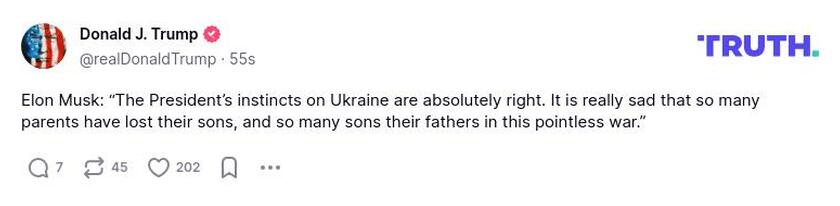
Elon Musk: “The President’s instincts on Ukraine are absolutely right. It is really sad that so many parents have lost their sons, and so many sons their fathers in this pointless war.”
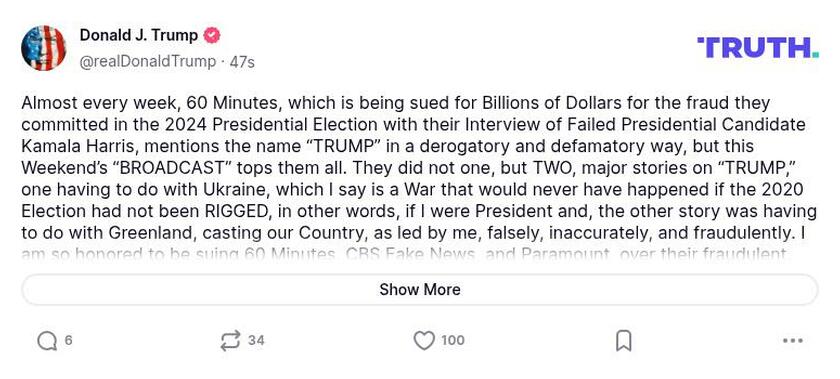
Think of it, a modestly successful comedian, Volodymyr Zelenskyy, talked the United States of America into spending $350 Billion Dollars, to go into a War that couldn’t be won, that never had to start, but a War that he, without the U.S. and “TRUMP,” will never be able to settle. The United States has spent $200 Billion Dollars more than Europe, and Europe’s money is guaranteed, while the United States will get nothing back. Why didn’t Sleepy Joe Biden demand Equalization, in that this War is far more important to Europe than it is to us — We have a big, beautiful Ocean as separation. On top of this, Zelenskyy admits that half of the money we sent him is “MISSING.” He refuses to have Elections, is very low in Ukrainian Polls, and the only thing he was good at was playing Biden “like a fiddle.” A Dictator without Elections, Zelenskyy better move fast or he is not going to have a Country left. In the meantime, we are successfully negotiating an end to the War with Russia, something all admit only “TRUMP,” and the Trump Administration, can do. Biden never tried, Europe has failed to bring Peace, and Zelenskyy probably wants to keep the “gravy train” going. I love Ukraine, but Zelenskyy has done a terrible job, his Country is shattered, and MILLIONS have unnecessarily died – And so it continues…..
I just spoke to President Volodymyr Zelenskyy of Ukraine. The conversation went very well. He, like President Putin, wants to make PEACE. We discussed a variety of topics having to do with the War, but mostly, the meeting that is being set up on Friday in Munich, where Vice President JD Vance and Secretary of State Marco Rubio will lead the Delegation. I am hopeful that the results of that meeting will be positive. It is time to stop this ridiculous War, where there has been massive, and totally unnecessary, DEATH and DESTRUCTION. God bless the people of Russia and Ukraine!
I just had a lengthy and highly productive phone call with President Vladimir Putin of Russia. We discussed Ukraine, the Middle East, Energy, Artificial Intelligence, the power of the Dollar, and various other subjects. We both reflected on the Great History of our Nations, and the fact that we fought so successfully together in World War II, remembering, that Russia lost tens of millions of people, and we, likewise, lost so many! We each talked about the strengths of our respective Nations, and the great benefit that we will someday have in working together. But first, as we both agreed, we want to stop the millions of deaths taking place in the War with Russia/Ukraine. President Putin even used my very strong Campaign motto of, “COMMON SENSE.” We both believe very strongly in it. We agreed to work together, very closely, including visiting each other’s Nations. We have also agreed to have our respective teams start negotiations immediately, and we will begin by calling President Zelenskyy, of Ukraine, to inform him of the conversation, something which I will be doing right now. I have asked Secretary of State Marco Rubio, Director of the CIA John Ratcliffe, National Security Advisor Michael Waltz, and Ambassador and Special Envoy Steve Witkoff, to lead the negotiations which, I feel strongly, will be successful. Millions of people have died in a War that would not have happened if I were President, but it did happen, so it must end. No more lives should be lost! I want to thank President Putin for his time and effort with respect to this call, and for the release, yesterday, of Marc Fogel, a wonderful man that I personally greeted last night at the White House. I believe this effort will lead to a successful conclusion, hopefully soon!
I am sending Secretary of the Treasury Scott Bessent to Ukraine to meet President Zelensky. This War MUST and WILL END SOON — Too much Death and Destruction. The U.S. has spent BILLIONS of Dollars Globally, with little to show. WHEN AMERICA IS STRONG, THE WORLD IS AT PEACE.